

Welcome to the Center for Psychological Humanities & Ethics, a place that promotes conversation between the psychological sciences and humanities to advance our understanding of the enduring ethical questions at the heart of human existence.

-

Fellow Highlight
Cultural Imagination Fellow Brian Goldstone Awarded Pulitzer Prize
Journalist, anthropologist, and Cultural Imagination Fellow Brian Goldstone has been awarded the 2026 Pulitzer Prize for General Nonfiction for his debut book: There is No Place for Us: Working and Homeless in America. Through the unforgettable stories of five Atlanta families, his book exposes a new and troubling trend — the dramatic rise of the “working homeless” in cities across America.
-

Event Highlight
The Vibrant Center: An Urgent Consciousness for Our Divided Times
Kirk J. Schneider, Ph.D. is a is a leading spokesperson for existential-humanistic and existential-integrative psychology. This talk proposed a call for what Dr. Schneider terms the “vibrant center" of consciousness, an existentially informed consciousness that is based on three pillars of psychological wisdom.
-

Conference Highlight
Harper's Magazine's Annual Award Ceremony
On October 26, Matthew Clemente, Director of Academics and Operations, and William Hendel, Program Director of the M.A. in Writing & the Human Condition program attended Harper's Magazine's Annual Award Ceremony at The Morgan Liberty & Museum in New York City.
-

Publication Highlight
First-Person Knowledge and the Meanings of Madness: An Interview with Gail Hornstein
Interviewed by Program Director of Boston College's Psy.D. in Clinical Psychology program Justin Karter, Psychologist Gail Hornstein discusses her search for the meanings of madness, from asylum artifacts and memoirs to the contemporary peer-support groups reshaping how people understand voices and visions.
-

New Book Series
Essays in Psychological Humanities Book Series
The Center is excited to announce the launch of a new book series with Routledge/Taylor and Francis. Written for academics, practitioners, and educated readers alike, the Essays in Psychological Humanities Series is home to short, timely, affordable titles authored by today’s leading thinkers on the most pressing and perennial problems we face.
-

Psychology Today: Our Human Condition
Dangerous Books and Why Vice Is a Virtue in Literature
"What good literature offers is not only moral exemplars but immoral ones; or, better, real human beings who possess all of the strengths and flaws, virtues and vices, and especially the messiness of real people in real situations."
Our work is organized into the following tributaries, each of which reflects an essential aspect of the human condition.
The ethos of the Center and the questions it takes up have been greatly shaped by the fact that it is situated at a Jesuit Catholic institution. Taking seriously the Ignatian emphasis on cura personalis (care for the whole person), the Center is dedicated to examining how Catholic spirituality and Jesuit pedagogy can inform our understanding of what it means to care for human beings. The projects and initiatives that fall under this tributary engage the richness of the Catholic tradition in order to help us learn to live for and with others.
Art shapes how we think about and interpret our lives. From the books we read to the films we watch to the music we listen to and even the digital media we consume, we are constantly reimagining ourselves and the world around us in relation to the artistic expressions of others. How often do we rely upon the words of our favorite songs when attempting to articulate our deepest longings? How often do we define ourselves in relation to and even emulate fictional characters? That art has a formative influence on the human psyche is undeniable. The work that falls under this tributary is dedicated to interrogating that influence and perhaps even inspiring the cultivation of new artistic creations.
The discipline that has come to exert the greatest influence on moral formation in contemporary society is, without question, psychology. In our quest for meaning and purpose, as we search for self-understanding, we often look to psychology for answers. Indeed, in spite of the fact that psychology has made a concerted effort to remain objective and morally neutral, it has, unbeknownst to itself, persistently functioned with an unacknowledged moral “ought.” Therapists may employ a strictly clinical vocabulary; but, as scholars like Philip Cushman invite us to acknowledge, psychotherapy is a thoroughly moral discourse. At the end of the day, therapists teach patients what it means to live a good life–an inescapably ethical project. The work that falls under this tributary is dedicated to examining and reimagining what it means to take seriously the moral underpinnings of psychological science.
That education plays a vital role in helping individuals to develop their virtues and thus to cultivate their character is obvious to anyone who wants to see individuals and communities flourish. From at least the time of the Greeks, though likely long before, human beings have understood that if we are to reach our full potential, both personally and collectively, we must receive “the right education,” as Plato wrote in the Republic, one geared toward character development. And yet, while many of us recognise the impact formal education has on human flourishing, we often overlook the forces at work in our society that shape our conception of the good life. Our understanding of flourishing is formed as much by the culture we live in as the classrooms we learn in. The work that falls under this tributary is dedicated to exploring the ways character is shaped through the discipline of psychology which has risen to a place of prominence in contemporary culture.
Upcoming Offerings

Emmy Waldman
CPHE Research Lab Speaker
Friday, November 13, 2026 at 12 pm
CPHE Research Lab Speaker
Friday, November 13, 2026 at 12 pm

ART CUT Closing Ceremony
Co-sponsored by the Center for Psychological Humanities and Ethics
Sunday, November 15, 2026 at 3 pm
Co-sponsored by the Center for Psychological Humanities and Ethics
Sunday, November 15, 2026 at 3 pm

Pope Leo and American Catholicism
Jack Hanson in Collaboration with the Boisi Center for Religion & American Public Life
Wednesday, November 18, 2026 at 12:30 pm
Jack Hanson in Collaboration with the Boisi Center for Religion & American Public Life
Wednesday, November 18, 2026 at 12:30 pm

Bells & Icons: A Gathering of Catholic Filmmakers
The Sheen Center for Thought & Culture, New York
Friday, December 4 – Sunday, December 6, 2026
The Sheen Center for Thought & Culture, New York
Friday, December 4 – Sunday, December 6, 2026

Psychology and the Other Chile
Universidad Alberto Hurtado Santiago, Chile
Friday, January 8 - Saturday, January 9, 2027
Universidad Alberto Hurtado Santiago, Chile
Friday, January 8 - Saturday, January 9, 2027

Guilt & Grace: Psychoanalysis and Catholicism
Adam Schneider, PhD
January 14, 2027 - May 13, 2027
Adam Schneider, PhD
January 14, 2027 - May 13, 2027

Come Closer: Wounds, Words, and the Psychoanalytic Process
Galit Atlas
Friday, February 19, 2027 at 5 pm
Galit Atlas
Friday, February 19, 2027 at 5 pm
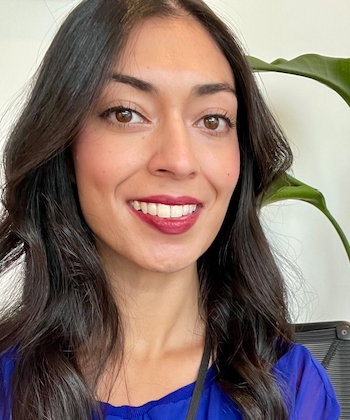
Liberatory Psychotherapy
Zenobia Morrill, PhD
March 2, 2027 - May 25, 2027
Zenobia Morrill, PhD
March 2, 2027 - May 25, 2027
Sin, Symptom, and Crime
Adam Schneider, PhD
Saturday, March 13, 2027 at 2 pm
Adam Schneider, PhD
Saturday, March 13, 2027 at 2 pm

Empathic Responses to Shame in Treatment
Sandra Buechler, PhD
Wednesday, April 14, 2027 at 6 pm
Sandra Buechler, PhD
Wednesday, April 14, 2027 at 6 pm

The Lily of Éire Art and Culture Festival
The Sheen Center for Thought & Culture, New York
Thursday, May 13 - Saturday, May 15, 2027
The Sheen Center for Thought & Culture, New York
Thursday, May 13 - Saturday, May 15, 2027

2027 Art & Character Conference
University of Navarra, Madrid, Spain
Thursday, June 3 – Saturday, June 5, 2027
University of Navarra, Madrid, Spain
Thursday, June 3 – Saturday, June 5, 2027
Popular Media
Reimaging Psychology or Revitalizing the Humanities
Matthew Clemente & David Goodman. Psychology Today, 2026.
Justin M. Karter. Psychology Today, 2025.
Creative Writing as Play Therapy
Matthew Clemente & David Goodman. Psychology Today, 2025.
Sometimes It’s Good to Be Embarrassed
Matthew Clemente & David Goodman. Psychology Today, 2025.
Matthew Clemente & David Goodman. Psychology Today, 2025.
Matthew Clemente & David Goodman. Psychology Today, 2025.
Are We Over-Therapizing the Youth Mental Health Crisis?
Victor Dubitans. Psychology Today, 2025.
Matthew Clemente & David Goodman. Psychology Today, 2025.
Learning to Live in the Present
Matthew Clemente & David Goodman. Psychology Today, 2025.
Liberating Psychotherapy, Society, and Yourself
Zenobia Morrill. Psychology Today, 2025.
On Kissing and Other Perversions
Matthew Clemente & David Goodman. Psychology Today, 2025.
Matthew Clemente & David Goodman. Psychology Today, 2025.
Can AI Replace Your Therapist?
Matthew Clemente & David Goodman. Psychology Today, 2025.
Mark Freeman. Psychology Today, 2024.
Matthew Clemente & David Goodman. Psychology Today, 2024.
The Peril and Promise of Technology
Matthew Clemente & David Goodman. Psychology Today, 2024.
Matthew Clemente & David Goodman. Psychology Today, 2024.
Resisting the “Me” Culture Can Lead to Greater Fulfillment
Matthew Clemente & David Goodman. Psychology Today, 2024.
Matthew Clemente & David Goodman. Psychology Today, 2024.
Matthew Clemente & David Goodman. Psychology Today, 2024.
Despair and the Crisis of Meaning
Matthew Clemente & David Goodman. Psychology Today, 2024.
Matthew Clemente & David Goodman. Psychology Today, 2024.
Matthew Clemente & David Goodman. Psychology Today, 2024.
Failed Resolutions and Broken Promises
Matthew Clemente & David Goodman. Psychology Today, 2024.
Matthew Clemente & David Goodman. Psychology Today, 2024.
Matthew Clemente & David Goodman. Psychology Today, 2024.
How Literature Teaches Compassion Over Condescension
Matthew Clemente & David Goodman. Psychology Today, 2023.
Matthew Clemente & David Goodman. Psychology Today, 2023.
Inviting Psychology to the Cocktail Party
Matthew Clemente & David Goodman. Psychology Today, 2023.
“ The argument over the question of whether or not psychology is or is not a philosophical science is, for psychology, a struggle for its very existence. ”